1. Lead by Example
Children are keen observers and often mimic the behaviors of adults around them. As parents or guardians, it’s essential to embody the qualities of brotherhood and sisterhood in your daily interactions. Be mindful of how you treat fellow Muslims and others in general. Demonstrating kindness, respect, and cooperation sends a powerful message to your children about how to interact with others in the Islamic community.
2. Teach the Concept of Ummah
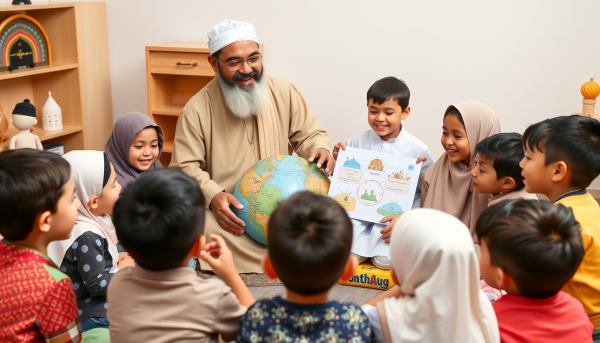
Help children understand that Muslims around the world are part of one global family, known as the Ummah. Share stories from the Quran and Hadith that highlight the importance of supporting one another, regardless of geographical or cultural differences. Children should be encouraged to see themselves as part of a larger community of believers, united by faith.
3. Encourage Participation in Islamic Gatherings
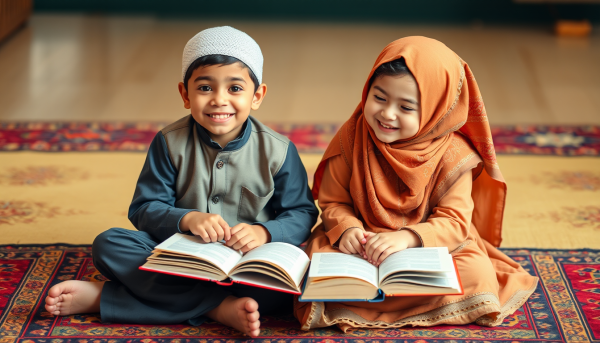
Taking your children to the mosque for prayers, Islamic classes, or community events allows them to interact with other Muslim children and adults. These gatherings offer opportunities for children to form bonds with their peers, while also developing a sense of belonging to the wider Muslim community. Through shared worship and learning, children can feel a deep connection with their brothers and sisters in Islam.
4. Promote Acts of Charity Together
Charity, or sadaqah, is one of the most practical ways to instill the values of brotherhood and sisterhood in children. Encourage them to help those in need, whether by donating clothes, food, or money. This can also be extended to small acts of kindness within their own circle—sharing toys with siblings, helping a friend in need, or being generous with their time and attention. When children see that their actions can make a difference in someone’s life, they will naturally feel connected to their community.
5. Share Stories of the Prophet (PBUH)
The life of Prophet Muhammad (peace be upon him) is filled with examples of brotherhood, compassion, and selflessness. Sharing stories of how the Prophet treated his companions with love and respect can inspire children to emulate these qualities in their own lives. For instance, narrating the story of how the Ansar (helpers of Medina) welcomed the Muhajirun (migrants from Mecca) is a powerful example of Islamic brotherhood and generosity.
6. Celebrate Diversity
In today’s world, children often interact with peers from different ethnicities, cultures, and backgrounds. Emphasize the beauty of diversity within the Muslim Ummah. Teach children that despite differences in language, skin color, or traditions, all Muslims are equal in the sight of Allah (SWT) and share the same faith. This can help them appreciate the value of unity in diversity and promote mutual respect and understanding.
7. Encourage Collaborative Activities
Children learn best through hands-on experiences. Organize collaborative activities that encourage teamwork and cooperation. These can range from group art projects, joint Quran recitation, or even helping each other with schoolwork. When children work together towards a common goal, they build bonds of friendship and learn the importance of supporting one another.
8. Instill Empathy and Compassion
Teaching children to be empathetic is key to nurturing brotherhood and sisterhood. Encourage them to put themselves in other people's shoes and to respond with kindness. Simple activities, such as asking how they would feel if they were in a friend’s situation, can help them develop empathy. This will foster a sense of responsibility toward others, making them more likely to offer support and care for their Muslim brothers and sisters.
9. Encourage Forgiveness and Reconciliation
In any relationship, conflicts are inevitable. Teach your children the importance of forgiveness and reconciliation, as highlighted in the Quran and the teachings of the Prophet Muhammad (PBUH). Encouraging them to forgive others and seek forgiveness when necessary fosters a spirit of unity and strengthens their bonds with others.
10. Make Dua for the Ummah
Finally, make it a habit to include the global Muslim community in your family’s prayers. Teach your children to make dua for their brothers and sisters in faith, particularly those who are suffering or facing hardship. This not only nurtures a sense of compassion but also reminds children of their connection to the larger Ummah.
Conclusion
Fostering Islamic brotherhood and sisterhood in children is a vital part of their spiritual upbringing. By modeling these values, encouraging community participation, promoting empathy, and instilling the teachings of the Quran and the Prophet Muhammad (PBUH), parents can raise children who feel a deep sense of responsibility and connection to their Muslim brothers and sisters. These early lessons will help shape a generation that embodies the Islamic principles of unity, compassion, and support for one another.